Most Accessible Country for Wheelchair Users? What 189 Travellers Said, and Why Kenya Belongs on the List
We read all 189 comments from disabled travellers debating which country is the most accessible in the world. Here’s what they agreed on, what they argued about, and why wheelchair accessible Kenya deserves a place in the conversation.
This week, a member of the Accessible Travel group on Facebook asked a simple question: what is the most accessible country you’ve ever been to? Within a day it had drawn 189 comments from wheelchair users, power-chair and scooter users, cane users, amputees, and parents of disabled children.
I read every one of them. Three things stood out. There was no clear winner. The same city could be heaven for one traveller and a nightmare for the next. And in nearly a hundred answers spanning five continents, not one person named a country in Africa.
Below is what the comments said about the most accessible countries for wheelchair users, the five lessons hiding in the thread, and the case for a destination that should have been on the list: Kenya.
The most accessible countries for wheelchair users, according to 189 travellers
The leaderboard (such as it is)
If you count raw mentions, a rough pecking order emerges:
- The United States came up more than any other country. Commenters credited the Americans with Disabilities Act (ADA) for consistent ramps, lifts, accessible hotel rooms and step-free bathrooms. New York, Florida, Boston and San Francisco all got shout-outs.
- Spain was the European favourite, with Barcelona described again and again as outstanding, including its metro and accessible beaches.
- The UK drew strong praise, especially for Changing Places toilets (with hoists and adult changing benches), accessible black cabs, the Elizabeth line, free carer tickets at theatres, and the way historic sites such as Windsor Castle and Hampton Court have been adapted.
- Japan was repeatedly named as the US’s closest rival, with its accessible restrooms singled out.
- Singapore, Dubai/UAE, Qatar and Taiwan impressed people with modern, joined-up infrastructure. One traveller said she had never seen so many accessible toilets anywhere as in Taiwan.
- Australia, Norway, Sweden, Switzerland, Thailand (Bangkok) and Ireland and a handful of others rounded out the list.
Why the “winners” were also the most argued about
Almost every popular answer was immediately challenged:
- One commenter argued the ADA is now dated and unevenly interpreted, and that other countries have since overtaken it.
- Paris was praised by one traveller and called “horrendous” by another. The Métro is largely off-limits except for Line 14, though buses and taxis work well.
- Amsterdam’s flat streets won fans, but a Dutch resident said lifts at metro stations are constantly out of order.
- Canada split the room completely: Toronto residents were happy, while people in Winnipeg, Calgary, Vancouver and Quebec City strongly disagreed.
- London was “not accessible, I won’t visit anymore” for one person and “pretty good” for a parent of a wheelchair user who lives there.
- Rome was the most divisive of all. A double amputee called it fantastic, while a paralysed wheelchair user said it was the least accessible city she had ever visited, with cobblestones, unusable bathrooms and a hotel lift exactly the width of her chair.
5 lessons about accessible travel hiding in the thread
1. Accessibility is a city question, not a country question
As one power-chair user put it, it’s more about which city than which country, and the more remote the location, the harder it gets. Big, tourist-heavy, well-funded cities consistently outperformed rural areas in the same country.
2. “Accessible” means different things to different bodies
A cane user notices staircases; a power-chair user notices lift widths; a family needing a hoist only cares whether a Changing Places toilet exists. That’s why the same place earned opposite verdicts.
3. Disability laws matter
The countries at the top of the list (the US, UK and Australia) all have enforceable anti-discrimination laws. Several people also pointed out that cities that have hosted the Olympics or Paralympics tend to be noticeably better, because hosting forces investment.
4. People can make up for poor infrastructure
This was the most moving theme. Mexico, Costa Rica and Italy were described as weak on infrastructure but wonderful on willingness to help. One traveller was carried up and down the Great Wall of China by a group of strangers. A mother described a tour guide and bus driver in Mexico carrying her daughter’s wheelchair up a full flight of stairs to a restaurant. Several people concluded that attitude, both theirs and their hosts’, shapes the trip more than anything.
5. Planning and specialist operators make the difference
People who had great trips often used accessible travel specialists to vet hotels and tours. A recurring warning: “accessible” hotel rooms that turn out to have no space for a wheelchair. As one commenter summed it up, almost anywhere can be accessible with enough forethought and planning.
Accessible travel in Africa: the missing continent
Out of roughly 96 top-level answers, not a single one named an African country. That isn’t because Africa can’t host disabled travellers. It’s because the continent rarely enters the conversation at all. Perceptions of rough roads, unknown standards and a lack of information keep it off the shortlist before anyone has even looked.
Kenya is a good place to start changing that.
Why Kenya belongs on the list of accessible destinations
1. A new, rights-based disability law
The thread showed that strong laws drive accessibility. Kenya now has one. President William Ruto signed the Persons with Disabilities Act, 2025 on 8 May 2025, and it came into force on 27 May 2025, replacing the older 2003 Act. It builds on Article 54 of Kenya’s 2010 Constitution, which guarantees persons with disabilities access to services and reasonable accommodation, and aligns with the UN Convention on the Rights of Persons with Disabilities, which Kenya ratified in 2008.
The Act requires accessibility in transport, buildings, technology and financial services, treats failure to provide reasonable accommodation as discrimination, and gives the National Council for Persons with Disabilities stronger powers to audit public and private places and enforce changes. It is early days, and lawmakers are still pushing all 47 counties to put it into practice, but the direction is clear.
2. A wheelchair accessible safari is one of the most accessible adventures on earth
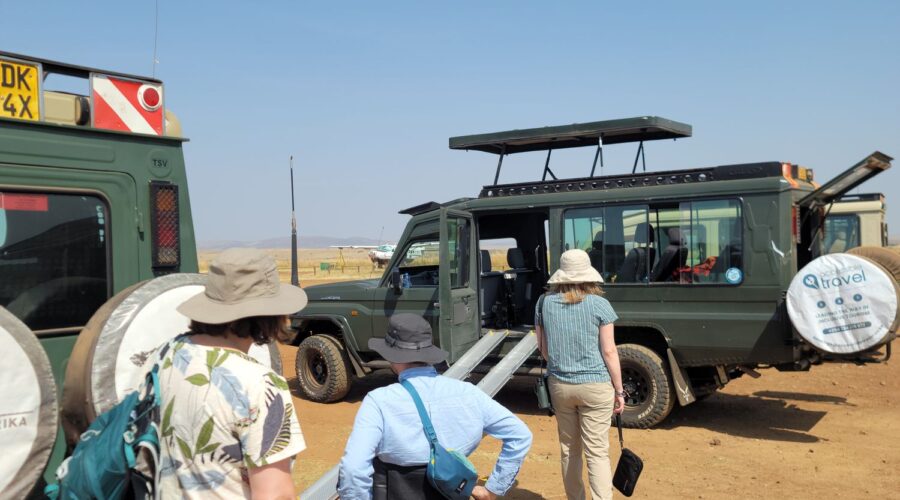
Think about what a classic Kenyan safari involves: you sit in a vehicle and the wildlife comes to you. There are no museum queues, no cobbled old towns and no metro stairs. Game drives in the Maasai Mara, Amboseli, Lake Nakuru and Tsavo are, by design, experiences you enjoy from a seat.
And the infrastructure has caught up:
- Accessible lodges and camps exist across the main safari circuit. Travellers and specialist guides point to options such as Mara Serena Safari Lodge and Sarova Mara Game Camp in the Maasai Mara, Amboseli Serena (single-storey with paved paths), Great Rift Valley Lodge near Naivasha, and Angama Mara, which has a fully wheelchair-accessible tented suite.
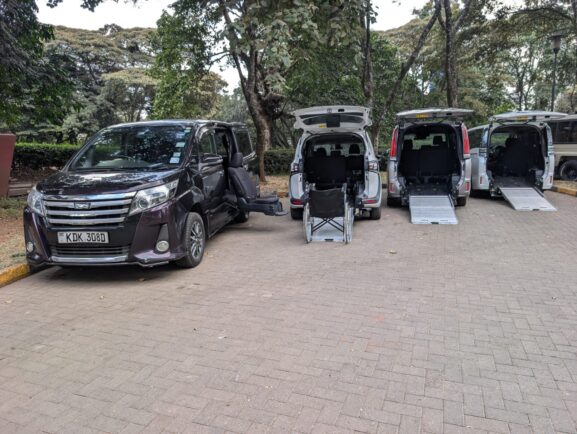
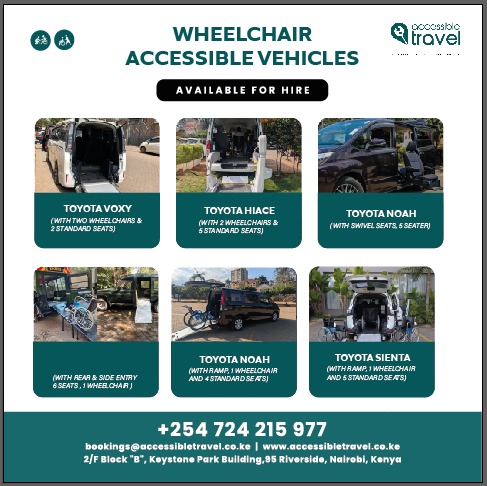
- Adapted safari vehicles with ramps are available, so you can stay in your own chair or transfer in comfort. See our wheelchair accessible safari vehicles and accessible car rental.
- Nairobi itself offers accessible highlights within easy reach: the Sheldrick Wildlife Trust elephant orphanage, the Giraffe Centre and Nairobi National Park, a wildlife park right next to a capital city. Read how Bryce combined Nairobi and Amboseli on one accessible trip.
3. Safari, beach and city in one trip
The thread’s favourites were mostly cities. Kenya lets you combine a city, a safari and the Indian Ocean coast (Diani, Mombasa and Watamu) in a single itinerary, with accessible beach resorts on the coast. Our Kenya Beyond Sight coast videos show what that looks like.
4. Hospitality is part of the product
The commenters who loved Mexico and Italy loved them for their people. Kenya’s tourism industry is built on hospitality, and safari guides, drivers and lodge teams are used to helping guests in and out of vehicles, along pathways and over uneven ground. Combined with real infrastructure, that willingness to help is exactly what the thread said makes a destination work.
Being honest about the gaps
The accessible travel community values honesty over marketing, so here it is:
- Public transport is not accessible. Matatus and most buses won’t work for wheelchair users; plan on private transfers or an adapted vehicle.
- Pavements in Nairobi and other towns are inconsistent, with broken kerbs and few dropped kerbs.
- Park roads can be rough and dusty. Long drives on corrugated roads are tiring; consider flying into airstrips (check boarding arrangements in advance) or breaking up long journeys.
- “Accessible room” standards vary. Just as commenters warned about US hotels, ask for photos and measurements of doorways, bathrooms and showers before you book.
- The new law is still being implemented, so don’t expect consistent standards outside tourism hubs yet.
How to plan an accessible Kenya trip: 5 tips
- Use an operator that specialises in accessible safaris and ask exactly how their vehicles are adapted (ramp, lift, swivel seat, space for a chair).
- Ask lodges for specifics: roll-in shower, grab rails, door widths, bed height, step-free paths to the dining area.
- Build in rest days between long road transfers.
- Bring your own essentials, such as a travel shower chair or commode, if you rely on them, or hire mobility equipment locally.
- Tell your guide what you need from day one. In Kenya, people will help, but they need to know how.
For a full breakdown of hotels, transport and parks, read Wheelchair Accessible Kenya: The Complete 2026 Travel Guide and 16 Questions We Actually Get Asked.
Frequently asked questions
What is the most accessible country for wheelchair users?
There is no single answer. In a discussion among 189 disabled travellers, the United States, Spain, the UK and Japan were mentioned most, but each was also strongly criticised. Accessibility depends far more on the specific city, hotel and your own needs than on the country.
Is Kenya wheelchair accessible?
Kenya’s main tourism areas are increasingly accessible. Safaris are done from a vehicle, adapted ramp vehicles are available, and several lodges in the Maasai Mara, Amboseli and Naivasha have wheelchair-accessible rooms. Public transport and town pavements are not accessible, so private transfers are essential.
Can you go on safari in a wheelchair?
Yes. A game drive is enjoyed seated, so it suits many wheelchair users. With an adapted vehicle and an accessible lodge, a wheelchair accessible safari in Kenya is very achievable.
Does Kenya have a disability law?
Yes. The Persons with Disabilities Act, 2025 came into force on 27 May 2025. It requires accessibility in transport, buildings, technology and financial services, and makes failure to provide reasonable accommodation a form of discrimination.
The bottom line
The most useful answer in that 189-comment thread was that there is no single “most accessible country”. Accessibility lives in specific cities, specific hotels, specific laws and, above all, specific people.
By those measures, Kenya has a stronger case than its absence from the conversation suggests: a modern disability law, a signature experience enjoyed from a vehicle seat, a growing number of accessible lodges and operators, and a hospitality culture that wants every guest to see the Mara.
Next time someone asks which country is most accessible, I hope at least one answer says Kenya.
Plan your accessible Kenya safari
Tell us who is travelling and what each person needs, and we’ll build a trip around it, with adapted vehicles, checked accommodation and rest days built in. Message us on WhatsApp, or start planning your holiday.
Have you travelled in Kenya, or anywhere in Africa, with a disability? Share your experience in the comments. Honest reviews are how this community gets better information for everyone.
Sources
- Accessible Travel group discussion on Facebook: “What is the most accessible country you’ve ever been to?” (November 2026)
- Persons with Disabilities Act, No. 4 of 2025 (Kenya Law)
- President Ruto signs Disability Rights Bill into law (Citizen Digital)
- The Persons with Disabilities Act, 2025 (Global Compact Kenya)
- Omtatah calls on counties to implement disability law (Kenyans.co.ke)
- Wheelchair Accessible Places to Stay on a Kenya Safari (WheelchairTravel.org)
- Wheelchair Accessible Things to Do in Nairobi (WheelchairTravel.org)